

About The Augustine Bioethics Network
We are an international network administered and overseen by a company limited by guarantee based in the United Kingdom. The network is supported by a committee, and by an advisory board which includes two theological advisors. The network is endorsed by the Catholic Medical Association UK. Our patron is the great philosopher and theologian, Augustine of Hippo.
Our structure
The Augustine Bioethics Network (ABN) is a network of volunteers, that is, of people who give their time and/or financial resources to promote a vision of bioethics that encompasses both the dignity and the vulnerability of every human person.
It has been established as a volunteer network not only to help ensure its financial sustainability but more fundamentally because its aim is to create and/or strengthen relationships between people who are seeking a shared vision for a more humane bioethics. The network is not only a means to a further end but is an element of that desired end.
To ensure that ABN functions efficiently and accountably, it is administered and overseen by a company limited by guarantee based in the United Kingdom. ABN Ethics Ltd is a not-for-profit company that has no shareholders. The organisation has no employees, and has no immediate plans to have employees, but pays for services including IT and administration. The directors and guarantors of the company are members of the organising committee. ABN is also support by an advisory board which includes two theological advisors. Our patron is the great philosopher and theologian, Augustine of Hippo.
Our aims
The aims of ABN are:
- to conduct and promote research and scholarship in bioethics informed by or concordant with the thought of Augustine, Thomas Aquinas and later thinkers in this tradition
- to make available resources in bioethics to biomedical scientists, healthcare professionals, patients, carers, pastors, and the general public
- to be of service to the Roman Catholic community in Great Britain and Ireland and internationally in relation to bioethics
- to work ecumenically across Christian communities and with people of others faiths for the common good
- to engage with consultations by government, professional bodies, and regulators on bioethical questions in law, public policy and regulation
Our activities
ABN will make resources available through its website. These will include:
- Papers previously published by ABN Members for which they hold the copyright or which are copyright free
- Papers written or commissioned for ABN
- Links to Roman Catholic Magisterial documents
- Resources from or links to organisations in harmony with the aims of ABN which are copyright free and/or used with permission
ABN will also
- Publish a regular digest on bioethics for members
- Provide, sponsor or advertise talks, seminars, or courses on bioethics
- Engage with public policy on bioethics, for example by submission to consultations by governments, regulators or professional bodies.
Committee members
Prof. Neil Scolding
PhD FRCP
Prof. Neil Scolding is the Emeritus Burden Professor of Clinical Neurosciences at the University of Bristol and a consultant neurologist in Cheltenham. He currently spends 3-4 months each year teaching and training in northern Uganda, at St Mary’s Hospital Lacor, and at Gulu University. He is a member of the Pontifical Academy for Life.
Neil Scolding is Chair of the Augustine Bioethics Network and a Guarantor of ABN Ethics Ltd.
He trained in Neurology in Cardiff, in Cambridge, and at the National Hospital for Neurology and Neurosurgery, Queen Square, and was a University Lecturer and Consultant Neurologist in Cambridge before coming to Bristol as the Foundation Burden Chairholder in 1999.

Prof. David Albert Jones
MA (Cantab), MA, MSt, DPhil (Oxon), FHEA
David Albert Jones is Secretary to the Augustine Bioethics Network and a Director of ABN Ethics Ltd. He is also a Professor of Bioethics at St Mary’s University, Twickenham, Clinical Professor at the Plunkett Centre for Ethics, Australian Catholic University, and Fellow at Blackfriars Hall, Oxford University.
Professor Jones read Natural Sciences and Philosophy at Cambridge, and Theology at Oxford. His doctorate, which focused on the thought of Augustine of Hippo and Thomas Aquinas, was published as Approaching the End (Oxford University Press, 2007). Other publications include The Soul of the Embryo (Continuum, 2004) and Euthanasia and Assisted Suicide: Lessons from Belgium (Cambridge University Press, 2017, co-edited with Chris Gastmans and Calum MacKellar) in addition to numerous book chapters and journal articles, most recently Slippery slopes down under: the progressive loosening of requirements for voluntary assisted dying in Australia and New Zealand New Bioethics November 2025.
Professor Jones is a member of the Commission of the Bishops’ Conferences of the EU (COMECE) Commission on Ethics and is a Corresponding Member of the Pontifical Academy for Life. In 2009 he was a member of a working party of the General Medical Council which helped draft its guidance on Treatment and Care Towards the End of Life. He served as Vice-Chair of the Ministry of Defence Research Ethics Committee from 2009-2024 and, while not formally a member, regularly attended the Moral and Ethical Advisory Group (MEAG) that provided independent advice to the UK government on moral, ethical and faith considerations during COVID (2019-2022). He has provided oral or written evidence to parliamentary, non-governmental, professional and regulatory bodies on over 100 occasions, both in the UK and internationally.

Gwen McCourt
BA (Lond), Dip.German (Open)
Gwen McCourt is Treasurer of the Augustine Bioethics Network and a Director of ABN Ethics Ltd. She is an experienced administrator and events organiser, with more than 15 years experience in general and financial administration.

Dr Mike Delany
Dr Mike Delany originally trained as a nurse at King’s College hospital in London. He later studied medicine at University College London and spent time working in anaesthetics and paediatrics before switching to general practice and spending twenty five years in that field. He holds an MA in Bioethics from St Mary’s, Twickenham and has a particular interest in helping healthcare professionals navigate the increasing number of ethical dilemmas encountered in everyday practice. He is a past president of the UK Catholic Medical Association.
Mike Delany is a Committee Member of the Augustine Bioethics Network and a Guarantor of ABN Ethics Ltd.
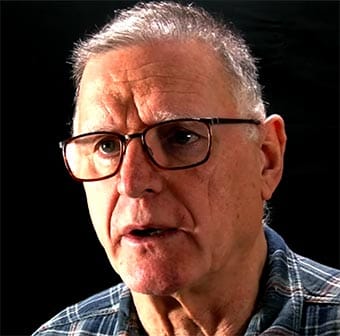
Advisory board
Prof Laura Palazzani
Professor Laura Palazzani is Professor of Philosophy of Law at LUMSAUniversity in Rome, where she also directs the Center for Bioethics and Digital Transition and the Center for ethics in scientific research. Her academic work spans bio-law, ethics of science and technology, human rights, and AI governance.
Prof. Palazzani served (2010-2025) as a member of the European Group on Ethics in Science and New Technologies (EGE), which advises the European Commission on the ethical implications of scientific and technological innovation. From 2016 to 2023, she was a member of the UNESCO International Bioethics Committee, where she contributed to global policy dialogue on biomedical ethics and the responsible development of AI. She has also been member and Vice President of the Italian National Bioethics Committee, the country’s advisory body on bioethical issues (2002-2022), and served on ethics committees of national institutions, including the Italian Ministry of Health and AIFA (Italian Medicines Agency). She has participated in numerous EU-funded research projects (Horizon 2020, Horizon Europe), working on the ethical, legal, and societal implications of AI, genomics, and digital transformation in health care. Her work with the Pontifical Academy for Life (as member since 2016 and in the Steering Committee since 2022) and in the Steering Committee of Human Rights in the field of Health and Biomedicine at the Council of Europe, reflects her deep commitment to ensuring that new technologies remains aligned with human dignity, justice, and human rights. Prof. Palazzani has published extensively on topics ranging from bioethics and bio-law (beginning and end of life issues) to AI and neuroscience and the law. She is also actively involved in teaching at both national and international levels.
Research fields: Bioethics, bio-law on beginning of life issues and end of life issues; cure and experimentations; AI and neurotechnologies between ethics and law; gender issues; C. Thomasius

Dr. Xavier Symons
Xavier Symons is Director of the Plunkett Centre for Ethics at ACU. Xavier previously worked as a Postdoctoral Research Fellow at the Human Flourishing Program in the Institute for Quantitative Social Science at Harvard University and prior to this was a Postdoctoral Research Fellow at the Plunkett Centre and a Research Associate at the Institute for Ethics and Society at the University of Notre Dame Australia. He has lectured in bioethics at the University of Technology Sydney Faculty of Law and at the University of Notre Dame Australia Medical School.
Xavier’s research interests span a broad range of themes in bioethics. He wrote a doctoral thesis on contemporary theories of distributive justice and the ethics of healthcare resource allocation. He has written extensively about the ethics of end of life care and voluntary assisted dying. More recently he has explored the ethics of conscientious objection in healthcare. His first book, Why Conscience Matters: A Defence of Conscientious Objection in Healthcare, was published in July 2022 by Routledge.
Xavier has contributed extensively to both Australian and international media outlets and his work has been featured in the Sydney Morning Herald, the Australian Financial Review, ABC Religion and Ethics, The Guardian, and Public Discourse. He holds degrees from the University of Sydney, the University of Oxford, and the Australian Catholic University.

Prof. Daniel Sumasy
MD, PhD, MACP
Daniel Sulmasy, MD, PhD, MACP is a Senior Research Scholar at the Kennedy Institute of Ethics and on the faculty of the Pellegrino Center for Clinical Bioethics. He is the inaugural Andre Hellegers Professor of Biomedical Ethics, with co-appointments in the Departments of Philosophy and Medicine at Georgetown.
His research interests encompass both theoretical and empirical investigations of the ethics of end-of-life decision-making, ethics education, and spirituality in medicine. He has done extensive work on the role of intention in medical action, especially as it relates to the rule of double effect and the distinction between killing and allowing to die. He is also interested in the philosophy of medicine and the logic of diagnostic and therapeutic reasoning. His work in spirituality is focused primarily on the spiritual dimensions of the practice of medicine. His empirical studies have explored topics such as decision-making by surrogates on behalf of patients who are nearing death, and informed consent for biomedical research.
He continues to practice medicine part-time as a member of the University faculty practice. He completed his residency, chief residency, and post-doctoral fellowship in General Internal Medicine at the Johns Hopkins Hospital. He has previously held faculty positions at the University of Chicago and New York Medical College. He has served on numerous governmental advisory committees, and served on the Presidential Commission for the Study of Bioethical Issues fro 2010-2017.
He is the author or editor of seven books: The Healer’s Calling (1997), Methods in Medical Ethics (2001; 2nd ed. 2010, 3rd ed. 2026), The Rebirth of the Clinic (2006), A Balm for Gilead (2006), Safe Passage: A Global Spiritual Sourcebook for Care at the End of Life (2013), Francis the Leper: Faith, Medicine, Theology, and Science (2014), and Physician Assisted Suicide and Euthanasia: Before, During, and After the Holocaust (2020). He also serves as editor-in-chief of the journal Theoretical Medicine and Bioethics.
Dr. Sulmasy holds a Ph.D from Georgetown University and an M.D from Cornell University. He holds emeritus status at the University of Chicago, where he was Kilbride-Clinton Professor of Medicine and Ethics in the Department of Medicine and Divinity School, Associate Director of the MacLean Center for Clinical Medical Ethics in the Department of Medicine, and Director of the Program on Medicine and Religion.

Dr Mary Neal
Reader Strathclyde University
Dr Mary Neal is currently a Reader at Strathclyde University. She holds LLB (Honours) and LLM (by research) degrees from the University of Glasgow, and a PhD from Cardiff University (2005).
Dr Neal teaches and co-ordinates two Honours classes: Abortion Law Honours and Law, Persons and Property Honours. She supervises research students in Healthcare Law and Ethics, Family Law, Human Rights, and Legal Theory.
Dr Neal’s main research interests are in the broad areas of Healthcare Law and Legal Theory, and her current research focuses on conscientious objection in healthcare, abortion law, ‘assisted dying’, human rights (particularly Article 9 and Article 10 ECHR), human dignity, and theories of property.

Prof Chris Gastmans
Chris Gastmans is Full Professor of Medical Ethics and Director of the Centre for Biomedical Ethics and Law, Faculty of Medicine, KU Leuven, Belgium. He is the coordinator of various empirical and philosophical research projects regarding ethical issues in care for older adults and end-of-life care. He is the (co-)author of more than 200 articles published in peer-reviewed international journals. He co-edited the book ‘Euthanasia and Assisted Suicide: Lessons from Belgium’ (Cambridge University Press).
He teaches medical ethics at the Faculty of Medicine and the Faculty of Theology. He also teaches ethics in end-of-life care in the KU Leuven Master of Bioethics programme. He co-ordinates the annual Summer Course on Ethics in Dementia Care and the annual Intensive Course in Nursing Ethics (www.cbmer.be).
He is member of the ethics committee of the University Hospitals of Leuven, the National Bioethics Committee of Belgium, and the Pontifical Academy for Life, Vatican City.

Prof. David Paton
Prof. David Paton is Professor of Industrial Economics at the Nottingham University Business School. He completed his PhD at University College London in 1997 and has published widely in journals such as Economic Journal, Management Science, Journal of Health Economics, Public Choice, Social Science & Medicine, Southern Medical Journal and Issues in Law and Medicine. He has acted as an adviser to several Government departments including HM Revenue and Customs, DCMS and the DTI, and has particular expertise in the economics of teenage pregnancy, Covid policy, gambling taxation, the post-Brexit economy, and the economics of cricket.

Rev. Prof. Emmanuel Agius
Mgr. Prof. Emmanuel Agius is the former Dean of the Faculty of Theology at the University of Malta. He studied philosophy and theology at undergraduate (S.Th.B.) and postgraduate (S.Th.L.) levels at the University of Malta and then at the Catholic University of Leuven, Belgium, where he obtained an M.A. in philosophy and S.Th.D. He pursued post-doctoral research in the field of bioethics at the University of Tuebingen, Germany as a fellow of the Alexander-von-Humboldt Stiftung; at Georgetown University, Washington, D.C. as a Fulbright scholar; and at the University of Notre Dame, Indiana, with the assistance of Theodore Hesburgh scholarship.
He is professor of Moral Theology and Philosophical Ethics at the University of Malta. He is the former Head of the Department of Moral Theology at Faculty of Theology, a member of the European Group of Ethics in Science and New Technologies (EGE), which is an advisory interdisciplinary group to the European Commission, and a member of the Pontifical Academy for Life. He is the moderator of the Commission on Ethics within the Commission of Bishops’ Conferences of the European Union (COMECE). For many years, he was an active member of the National Consultative Bioethics Committee, the coordinator of the Euro-Mediterranean Programme on Intercultural Dialogue, Human Rights, and the Future Generations Programme, which was supported by UNESCO. H.G. the Archbishop, Mgr. Charles J. Scicluna, appointed Mgr. Agius member of the Metropolitan Cathedral Chapter on 25th January 2018 and member of The St John’s Co-Cathedral Foundation on 1st August 2019. On 13th December 2020, Prof Agius received Malta’s highest honour (Midalja ghall-Qadi tar-Repubblika) for his sterling service in the area of bioethics and professional ethics, both in his native country and on the international scene. Prof. Agius is the author and co-editor of a number of publications. Several of his articles on bioethical, social and environmental issues, marriage and sexuality have appeared in a number of international peer-reviewed academic journals.

Prof. Elena Postigo
Elena Postigo Solana holds a degree in Philosophy from the Università del Sacro Cuore in Milan and a PhD in Bioethics from the Università Cattolica del Sacro Cuore in Rome (2000), with a dissertation on the philosophical concept of death, brain death, and its bioethical implications.
She has been Professor of Bioethics at the Gemelli Hospital in Rome, at the University of Navarra, and at Universidad CEU San Pablo in Madrid. She is currently Associate Professor of Anthropology and Bioethics at Universidad Francisco de Vitoria, where she also serves as Director of the Institute of Bioethics. In addition, she is a Visiting Professor in several official Master’s programs in Bioethics in Spain and abroad.
Author and co-editor of several books, she has published numerous articles on topics related to the foundations of bioethics and specific areas of applied bioethics. In recent years, her research has focused on Transhumanism, its theoretical foundations, and its bioethical implications, as well as on the bioethics of emerging technologies as applied to the human person.
She is a member of the Scientific Committee of the Centro di Ateneo di Bioetica e Scienze della Vita and of the Centro di ricerca sulla filosofia della persona Adriano Bausola (CrifipAB) at the Università Cattolica del Sacro Cuore in Milan.
She is a member of the Board of Directors of AEBI (Spanish Association of Bioethics and Medical Ethics) since 2003, and a member of the editorial boards of the journals Cuadernos de Bioética, Bioética y Persona, Medicina y Ética, Thémata, and Comprendre.
She is a Research Scholar at the UNESCO Chair in Bioethics and Human Rights in Rome and President of the International Chair of Bioethics Jérôme Lejeune (Madrid). She was an Academic Visitor at the University of Oxford in 2006 and 2012, and served as Vice-Rector for Research at Universidad CEU San Pablo in Madrid from 2009 to 2011. Since 2005 she has been a corresponding member of the Pontifical Academy for Life.

Dr Dominic Whitehouse
MBChB, MSc (distinction), MA (distinction), PGDip (Pall Med, distinction), DCH, DTM&H, AFOM, FRCP
Dr Whitehouse has worked as a military and NHS doctor, initially a consultant in respiratory and intensive care medicine, seeing active service in Iraq in both the first and second Gulf Wars and in Afghanistan. He also volunteered as a military reservist to go out to Sierra Leone to care for Ebola victims during the outbreak there. For the last 10 years he has been a consultant physician in palliative medicine at St Wilfrid’s Hospice in Chichester. Due to the ethical challenges he has found in his work he undertook a Masters in Bioethics and Medical Law, and he also holds a Masters in Preventive Medicine, as well as his clinical qualifications. He has been active in the political and ethical debates around assisted dying. He is Married to Maria, they have 6 children and are awaiting their 8th grandchild.

Professor Bairbre Golden
Professor Bairbre Golden is a Senior Lecturer in Trinity College Dublin and was previously an Assistant Clinical Professor and Clinical Lecturer at University College Dublin. She is also a Consultant Anaesthetist in active clinical practice. She holds consultant privileges at the Blackrock Health Hermitage Clinic, Dublin, and provides locum cover to Tallaght University Hospital, part of the Trinity College Hospital Group. Previously, she worked as a Consultant Anaesthetist at St. Bartholomew’s Hospital, London.
Professor Golden is the founder and immediate past Director of the National Clinical Programme in Anaesthesia, a collaboration between the Health Service Executive and the College of Anaesthetists of Ireland. In this role, she led the delivery of multiple national strategies aimed at improving anaesthesia services, workforce planning, education, and the care of critically ill adults, children, and pregnant women. She has also served as President of the Section of Anaesthesia at the Royal Academy of Medicine in Ireland.
From 2013 to 2018, she was a member of the Irish Medical Council, serving on several key committees including Ethics and Professionalism, Fitness to Practise, Audit, Strategy and Risk, and chairing Fitness to Practise panels and Section 60 applications. Her work involved complex, sensitive decision-making at the highest regulatory level. She holds a BD from Heytrop College and her MPhil (Cantab) Thesis examined ethical issues raised by the covid pandemic.
Alongside her clinical career, Professor Golden has extensive experience as a senior management advisor to the healthcare sector. She holds an MBA in Health Services Management, is a Certified Management Consultant and Certified Physician Executive, and has undertaken executive education at INSEAD and Harvard Business School. She previously worked full-time in healthcare consulting with Deloitte.
Professor Golden is widely published, has presented nationally and internationally, and remains on the Specialist Register for Anaesthesia with both the Irish and UK medical councils.

Dr. Calum MacKellar
After completing his ‘Diplome D’Ingenieure’ in Chemistry and Chemical Engineering with the European High Institute of Chemistry of Strasbourg (now part of the University of Strasbourg), France, and his doctorate in Biochemistry with the University of Stuttgart in Germany, Dr. MacKellar began working in 1991 with the University of Edinburgh, in Scotland, synthesising new genetic antivirals against HIV as a post-doctoral research fellow. In 1993, he continued this research synthesising new kinds of DNA and RNA in a Biotechnology company in Glasgow for more than four year. During this time he also started working for the international journal Human Reproduction and Genetic Ethics which changed its title in 2012 to become The New Bioethics – he is now an associate editor.
In 1997, Dr. MacKellar began teaching Biological Chemistry and Bioethics at Queen Margaret University in Edinburgh, returning to Strasbourg in France, in 2001, to work as a senior civil servant with the Bioethics Division of the Council of Europe. In 2003, he returned to Scotland as the Director of Research of the Scottish Council on Bioethics.
As well as being a Fellow with the Center for Bioethics and Human Dignity at LeTourneau University, Texas, USA, he has been a Visiting Lecturer and Visiting Professor in Bioethics, since 2010, at St Mary’s University in London.
Publications
– Genetically Edited Children and the Risks to Equality, Calum MacKellar, Roberto Andorno and Matthew James (eds.), Bristol University Press (In Press)
– The Ethics of Generating Posthumans: Philosophical and Theological Reflections on Bringing New Persons into Existence. 2022. Calum MacKellar and Trevor Stammers (eds), London, New York: Bloomsbury Academic.
– Christianity and the New Eugenics: Should we choose to have only healthy or enhanced children? 2020. Calum MacKellar, London: IVP Books (SPCK).
– Cyborg Mind: What Brain–Computer and Mind–Cyberspace Interfaces Mean for Cyberneuroethics. 2019. Calum MacKellar (ed), Oxford, New York: Berghahn Books.
Edited volume written as a monograph.
Nominated for the Eileen Basker Memorial Prize sponsored by the US Society of Medical Anthropology.
– Euthanasia and Assisted Suicide: Lessons from Belgium. 2017. Calum MacKellar,
David Albert Jones and Chris Gastmans (eds), Cambridge: Cambridge University Press (Cambridge Bioethics and Law Series).

Professor the Baroness Sheila Hollins
Professor Sheila the Baroness HOLLINS is an independent Peer in the House of Lords where she speaks on mental health, disability and life issues. She has served on several select committees and is currently a member of the Public Services Committee.
She is Emerita Professor of Psychiatry of Disability, City St George’s, University of London and former Academic Chair of the Department of Mental Health Sciences.
Baroness Hollins is currently President of The Catholic Union of Great Britain. She founded and chairs Books Beyond Words (a charity to develop book clubs and create word-free stories for people of all ages who find pictures easier than words) and chairs the John Fisher Network (a charity to aid and support those in positions of authority within the Church).
She was a founder member of the Pontifical Commission for the Protection of Minors (2014-2018), and Chair of the International Scientific Advisory Board, Centre for Child Protection, Pontifical Gregorian University, Rome (2015 -2023).
Baroness Hollins is a past President of the Royal College of Psychiatrists, the British Medical Association, the Royal College of Occupational Therapists and the Royal Medical Benevolent Fund.

Rev. Fr. Nicanor Pier Giorgio Austriaco
O.P., Ph.D., S.Th.D., M.B.A.
Fr. Nicanor Austriaco, O.P., currently serves as Professor of Biological Sciences and Professor of Sacred Theology at the University of Santo Tomas in Manila, Philippines, and a Professorial Lecturer in Philosophy (Bioethics) at the University of the Philippines, Diliman. He is also the current chairman of the National Transplant Ethics Committee of the Department of Health of the Philippines that provides ethical oversight over all the organ transplants in the archipelago. Finally, he serves on the Private Sector Advisory Council (PSAC) Philippines, an advisory council to the President of the Philippines, where he is a member of the subcommittee on healthcare.
Fr. Austriaco completed his Bachelor of Science in Bioengineering, summa cum laude, at the University of Pennsylvania and then earned his Ph.D. in Biology from M.I.T. where he was a fellow of the Howard Hughes Medical Institute (HHMI). After his doctoral studies, he did a fellowship at the Ludwig Institute for Cancer Research at the University College London, where he was a fellow of the International Human Frontier Science Program (IHFSP).
After his ordination to the priesthood in the Order of Preachers, he earned his Pontifical Bachelor of Theology (S.T.B) and then his License in Sacred Theology (S.T.L.) in Moral Theology, both summa cum laude, at the Dominican House of Studies in Washington, DC, and a Pontifical Doctorate in Sacred Theology (S.Th.D.) in moral theology at the University of Fribourg in Switzerland, in 2015. He completed his M.B.A. at Providence College in 2020.
Fr. Austriaco has published numerous research papers in high-impact science, philosophy, and theology journals. His first book, Biomedicine and Beatitude: An Introduction to Catholic Bioethics, was published by the Catholic University of America Press in 2011. It was recognized as a 2012 Choice Outstanding academic title by the Association of College and Research Libraries. A third edition of the book should be published in 2027.

Theological Advisors
Sr Margaret Atkins
Canoness of St. Augustine, Boarbank Hall
Sr Margaret is a Canoness of St Augustine in the community at Boarbank Hall in Cumbria. She was a Senior Lecturer in Theology at Trinity and All Saints College, Leeds. She has particular interests in virtue ethics, in the ethics of healthcare and of the environment, and in St Augustine.

Rev.Dr. John O’Connor OP
John O’Connor is Regent of Blackfriars Hall and a Dominican friar. He has a doctorate in moral philosophy from the University of Edinburgh; and an MA in Philosophy and Theology from the University of Oxford. In addition, he has a DPhil in applied physics from the University of Oxford. His research centres mainly on the dialogue between contemporary philosophy and moral theology; but he also has active interests in aesthetics, metaphysics, philosophical theology, and science and religion. He has been a Teaching Fellow in Philosophy at the University of Edinburgh and a Lecturer in Theology and Religious Studies at the University of Glasgow; and is currently an associate member of the Faculty of Theology and Religion, University of Oxford. He has also been a parish priest in Glasgow and Edinburgh, where he was active in university chaplaincy ministry.
Research Interests:
Moral Philosophy and Theology; Virtue Ethics; Natural Law; Ethics of St Thomas Aquinas; Value Theory and Theology; Debates on theory/anti-theory in ethics; Metaphysics and Theology; Philosophical and Theological Aesthetics; Science and Religion.
Links:
https://www.bfriars.ox.ac.uk/people/rev-dr-john-oconnor
https://www.theology.ox.ac.uk/people/dr-john-d-oconnor
Publications:
‘What Makes an Ethical Account a Natural Law Ethical Account? Contemporary Ethics, Metaethics, and Normative Ethics’, Studies in Christian Ethics, 37(2), May 2024, pp. 303-326. https://doi.org/10.1177/09539468241233182
‘Natural Law and Ethical Non-Naturalism’, Studies in Christian Ethics, 34(2), May 2021, pp.190-208; https://doi.org/10.1177/0953946820962893
‘Theological Aesthetics and Beauty as Revelatory: An Interdisciplinary Assessment’ in Heather Walton (ed.), Literature and Theology: New Interdisciplinary Spaces, Routledge 2011, pp. 111-126;
‘Theological Aesthetics and Revelatory Tension’, New Blackfriars 89(1022), July 2008, pp.399-417;
‘Are virtue ethics and kantian ethics really so very different?’, New Blackfriars 87(1009), May 2006, pp.238-252; ‘Expansive Naturalism and the Justification of Metaphysics in Sacramental Theology’, New Blackfriars 84(989/990), July/August 2003, pp.361-370.


Why a patron in bioethics?
The function of a patron for an organisation devoted to bioethical enquiry is to provide an anchor, guide, or beacon in a space that is confusing and contested.
‘Bioethics’ is the discipline or set of disciplines that considers the ethics of medical interventions and the ethical implications of the human biological sciences. It thus concerns human persons as animals, that is, as beings who are born and die, who become ill or injured and who recover or decline, who are not always strong and independent but who live and die in a web of interdependencies. This is the ‘bio-‘. At the same time, it concerns human beings as rational, relational, and cultural: as capable of making decisions (for ourselves or for others, by ourselves or with others) that can be called to account and can be judged as good or bad, just or unjust. This is the ‘-ethics’.
Regrettably much bioethics is conducted as a kind of moral mathematics using a limited set of ethical principles. The most prominent principle invoked in contemporary bioethics is certainly autonomy, which is often reduced to ‘patient choice’. This, at its worst, reduces to a form of abandonment where professionals take no responsibility for what treatment they give. It is the patient who decides. At the same time this principle gives no autonomy to the conscience or professional judgement of the doctor. The irony here is that the principle of autonomy attributes strength to people when they are at their weakest, and seeks to abstract and isolate them from those who most support them.
Another prominent principle in contemporary bioethics is utility, which seeks to measure the worthwhileness of interventions, and sometimes the worthwhileness of patients’ lives, in terms of health outcomes. The irony with this principle is that it is biased against those who are most in need of healthcare and who most use health services. It systematically discriminates against those with fewer years to live and who have fewer activities through which to show their worth.
Why Augustine?
Against such approaches it is important to assert the dignity of the human person, which is both the dignity of our mind or soul and the dignity of our bodily life. At the same time it is important to assert the vulnerability of the human person, which is both the vulnerability of our bodily life and the vulnerability of our mind or soul.
In this there is no greater guide than Augustinus Aurelius (354-430 CE), also known as Augustine of Hippo. Augustine was one of the greatest thinkers of the ancient world, and is taken as a patron saint for philosophers and theologians. From Platonism he learned that there are standards of truth and justice that are outside us and which we do not yet possess but aspire to. However, his conversion to Christianity showed him that Platonism fails to grasp the dignity of the human body and the natural unity of body and soul. From Stoicism he learned that we should be guided by reason not passion, but he came to see how virtue consists not in the suppression of the emotions but the informing of passion by reason and ultimately by love.
This vision helped Augustine give clarity to the ethics of taking life whether of others or of oneself and the ethics of bringing forth life. He also wrote both of the possibility of life apart from marriage and of the virtues of marriage. Both his rule of life for celibate communities and his work on the good of marriage remain influential to this day. He established an intellectual tradition that includes, among others, the great medieval philosopher and theologian Thomas Aquinas. This tradition is a bulwark against narrower and reductive forms of bioethics. Augustine does not provide answers to every bioethical question, many of which involve new techniques or new biological knowledge, but he helps orient our thought to continue to deepen our understanding of the mystery of the human person, animal and spirit.