Description
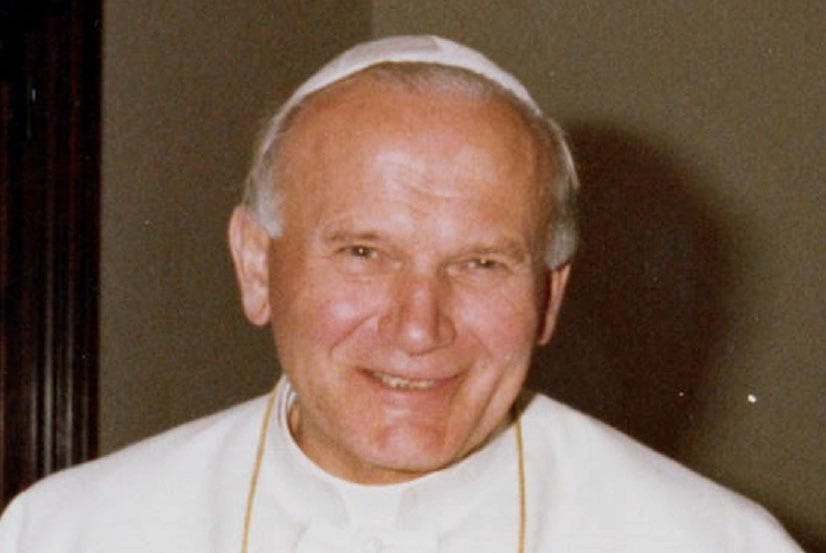
Pope John Paul II emphasises the ‘great ethical value’ of organ donation,[3] while making clear that to ‘commercialize human organs’ is ‘morally unacceptable’.[3] This Magisterial document is the first to address the determination of death by neurological criteria, also known as ‘brain death’. On this topic, the Pope first lays down the ethical principle that ‘vital organs which occur singly in the body can be removed only after death’.[4] On how death is determined, the Pope states that ‘the Church does not make technical decisions’, as to which ‘signs’ are required.[5] The Church nevertheless provides a ‘Christian understanding of the unity of the person’,[5] and can make a determination of the issue in principle on this basis. Pope John Paul II concludes that ‘the criterion adopted in more recent times for ascertaining the fact of death, namely the complete and irreversible cessation of all brain activity, if rigorously applied, does not seem to conflict with the essential elements of a sound anthropology’.[5] This speech also touches on the issues of allocation of donated organs [6] and of xenotransplantation.[7]
NB This description is not to be understood as a commentary or interpretation. It is provided only as an aid to help find material on particular bioethical topics.
Read on The Vatican web siteImage: Gov.pl, CC BY 3.0 PL, via Wikimedia Commons